
In My Shoes is a storytelling-based card game designed to help people build empathy and reconnect with each other through meaningful conversations. Inspired by research showing that social isolation contributes significantly to addiction, this game encourages players to safely share personal experiences and emotions without fear of judgment. It can be used casually among friends and families or in professional settings like therapy sessions and rehabilitation programs.
YES! Game Session
Players:
Players:
2 - 6 players
2 - 6 players
Duration:
Duration:
20 - 30 minutes
20 - 30 minutes
YES! Game Session
Players:
2 - 6 players
Duration:
20 - 30 minutes
What is In My Shoes?
In My Shoes is a storytelling-based game designed to foster empathy, rebuild connections, and deepen understanding between players. It provides a safe space for open conversations, helping participants share experiences without fear of judgment or rejection, and fostering deeper interpersonal connections.
Active Listening & Validation
Creating an environment where participants feel heard and supported.
Active Listening & Validation
Creating an environment where participants feel heard and supported.
Empathy Development
Improving emotional intelligence by guessing and recognizing emotions and needs in oneself and others.
Psychological Distancing
Third-person storytelling to safely explore difficult emotions.
Psychological Distancing
Third-person storytelling to safely explore difficult emotions.
CBT & NVC Integration
Cognitive Behavioral Therapy and Non-Violent Communication to encourage positive thinking and clear emotional communication.
Active Listening & Validation
Creating an environment where participants feel heard and supported.
Empathy Development
Improving emotional intelligence by guessing and recognizing emotions and needs in oneself and others.
Psychological Distancing
Third-person storytelling to safely explore difficult emotions.
CBT & NVC Integration
Cognitive Behavioral Therapy and Non-Violent Communication to encourage positive thinking and clear emotional communication.

Background

This project originated from the desire to help individuals recovering from addiction regain independence and rebuild their lives. Our team explored cities significantly impacted by substance abuse, studying their histories, current situations, and potential futures to identify the root causes and possible solutions to addiction.
This project originated from the desire to help individuals recovering from addiction regain independence and rebuild their lives. Our team explored cities significantly impacted by substance abuse, studying their
This project originated from the desire to help individuals recovering from addiction regain independence and rebuild their lives. Our team explored cities significantly impacted by substance abuse, studying their histories, current situations, and potential futures to
Although providing practical support like housing, education, and medical care is important, we recognized that addressing emotional and social factors underlying addiction is even more critical.
histories, current situations, and potential futures to identify the root causes and possible solutions to addiction. Although providing practical support like housing, education, and medical care is important, we recognized that addressing emotional and social factors underlying addiction is even more critical.
identify the root causes and possible solutions to addiction. Although providing practical support like housing, education, and medical care is important, we recognized that addressing emotional and social factors underlying addiction is even more critical.
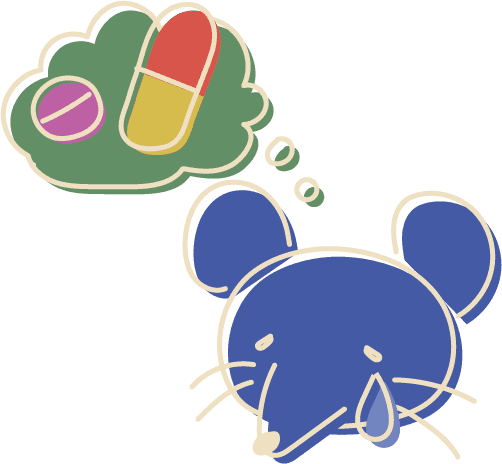
Inspired by the Rat Park Experiment, conducted by Canadian psychologist Bruce K. Alexander in the late 1970s, we learned that addiction isn't just a chemical dependency but is deeply influenced by social isolation and one's environment. Social isolation can both lead to and result from addiction.
Inspired by the Rat Park Experiment, conducted by Canadian psychologist Bruce K. Alexander in the late 1970s, we learned that addiction isn't just a chemical dependency but is deeply influenced
Inspired by the Rat Park Experiment, conducted by Canadian psychologist Bruce K. Alexander in the late 1970s, we learned that addiction isn't just a chemical dependency but is deeply influenced by social isolation and one's
Many people experiencing addiction lose connections with loved ones. Our project places significant emphasis on rebuilding these emotional relationships because we believe that empathy and meaningful human connections are essential for successful recovery and lasting rehabilitation.
by social isolation and one's environment. Social isolation can both lead to and result from addiction. Many people experiencing addiction lose connections with loved ones. Our project places significant emphasis on rebuilding these emotional relationships because we believe that empathy and meaningful human connections are essential for successful recovery and lasting rehabilitation.
environment. Social isolation can both lead to and result from addiction. Many people experiencing addiction lose connections with loved ones. Our project places significant emphasis on rebuilding these emotional relationships because we believe that empathy and meaningful human connections are essential for successful recovery and lasting rehabilitation.
The game can be played casually among friends and family or integrated into
rehabilitation centres, counselling sessions, and therapeutic programs.
The game can be played casually among friends and family or integrated into
rehabilitation centres, counselling sessions, and therapeutic programs.
The game can be played casually among friends and family or integrated into rehabilitation centres, counselling sessions, and therapeutic programs.
What's Inside?
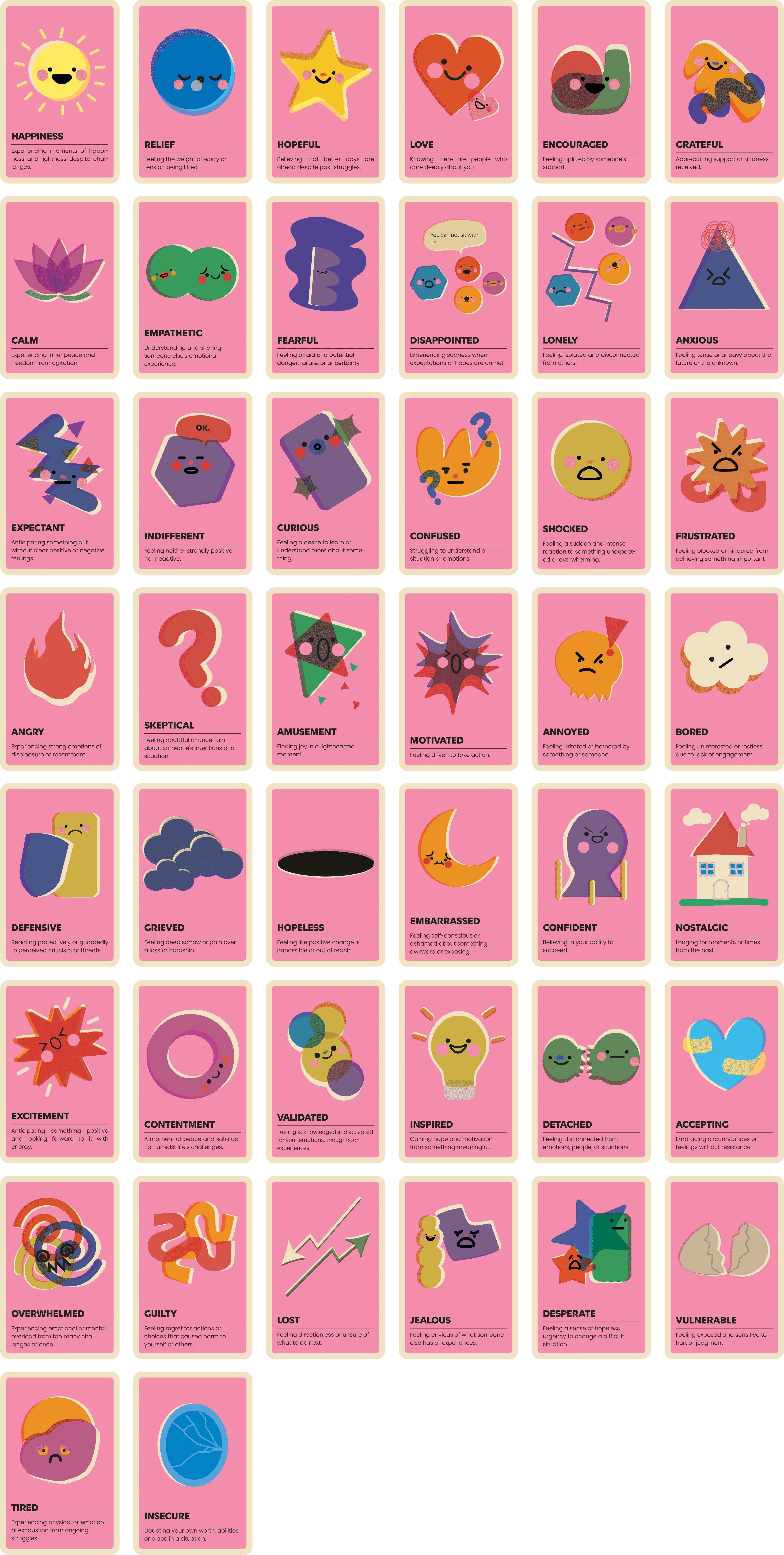
FEELINGS CARDS
X 44
X 44
X 44

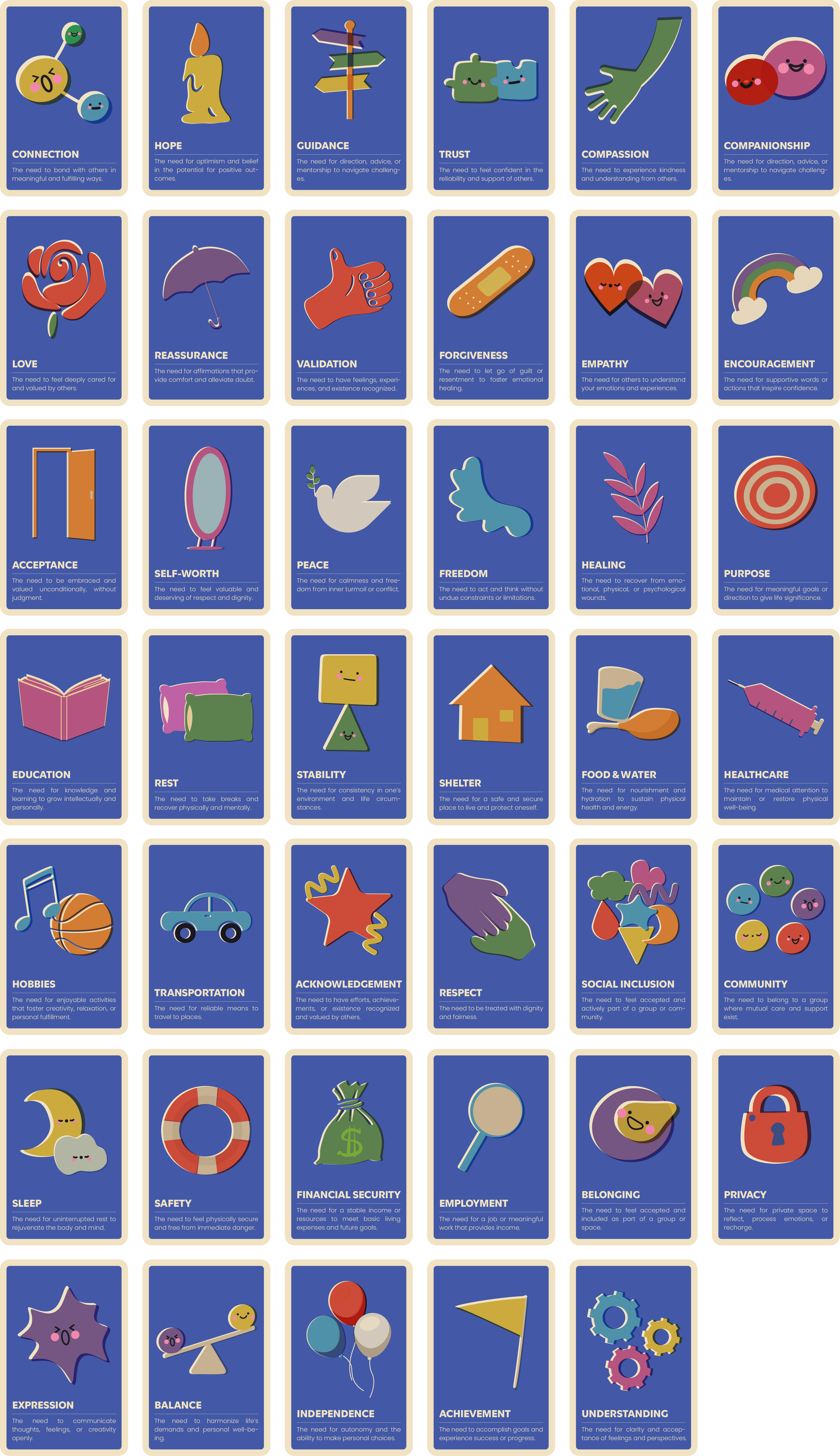
NEEDS CARDS
X 41
X 41
X 41

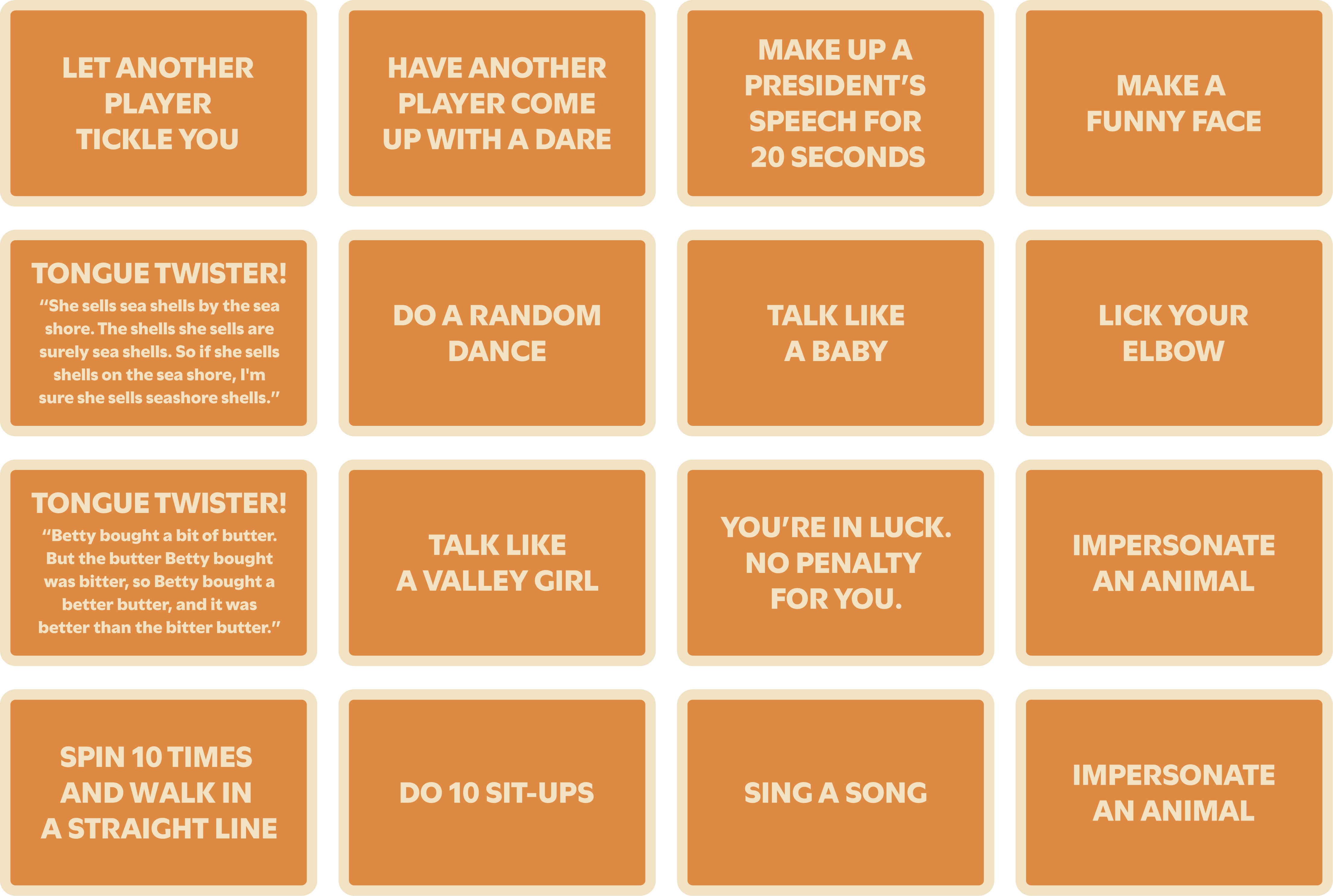
CHALLENGES CARDS
X 15
X 15
X 15

PENALTY TOKENS

HOURGLASS

CHARACTER STANDEES
X 6
X 6
X 6






How to play
01
Choose a storyteller. The storyteller will share any of their personal experiences with others.
Choose a storyteller. The storyteller will share any of their personal experiences with others.
02
Give feelings and needs cards to all players except the storyteller.
Give feelings and needs cards to all players except the storyteller.


03
Place challenge cards face-down and set up penalty and character standees.
Place challenge cards face-down and set up penalty and character standees.

04
Storyteller picks character standees to represent their story's figures and name them.
Storyteller picks character standees to represent their story's figures and name them.
Storyteller picks character standees to represent their story's figures and name them.
05
Flip the hourglass and the storyteller start telling their story. They will have 5 minutes to tell the story.
Flip the hourglass and the storyteller start telling their story. They will have 5 minutes to tell the story.
06
The storyteller must describe their personal experience objectively, without emotions or judgments. Narrate the story in the third person using the character standees. If emotions or judgments are included, the storyteller gets a penalty token. When the storyteller collects two penalty tokens, they draw a challenge card from a deck and complete a task on it.
The storyteller must describe their personal experience objectively, without emotions or judgments. Narrate the story in the third person using the character standees. If emotions or judgments are included, the storyteller gets a penalty token. When the storyteller collects two penalty tokens, they draw a challenge card from a deck and complete a task on it.
The storyteller must describe their personal experience objectively, without emotions or judgments. Narrate the story in the third person using the character standees. If emotions or judgments are included, the storyteller gets a penalty token. When the storyteller collects two penalty tokens, they draw a challenge card from a deck and complete a task.
07
After the storytelling is complete, each player takes turns placing a feeling card that they believe represents the storyteller’s emotions in the described situation, explaining their choice. The storyteller must not react. If a player has no relevant feelings cards left, they may say 'Pass.' The round continues until all players have passed.
After the storytelling is complete, each player takes turns placing a feeling card that they believe represents the storyteller’s emotions in the described situation, explaining their choice. The storyteller must not react. If a player has no relevant feelings cards left, they may say 'Pass.' The round continues until all players have passed.
After the storytelling is complete, each player takes turns placing a feeling card that they believe represents the storyteller’s emotions in the described situation, explaining their choice. The storyteller must not react. If a player has no relevant feelings cards left, they may say 'Pass.' The round continues until all players have passed.


08
The storyteller selects 3-5 feelings cards from the ones placed by players without explaining their choices.
The storyteller selects 3-5 feelings cards from the ones placed by players without explaining their choices.
09
The process repeats with needs cards. Players place cards representing what the storyteller might have needed. The storyteller picks 3-5 cards.
The process repeats with needs cards. Players place cards representing what the storyteller might have needed. The storyteller picks 3-5 cards.
10
The storyteller retells the story, this time including their emotions and thoughts in the first person. As they narrate, they also explain why they felt their previously chosen feeling and needs cards were the most relevant.
The storyteller retells the story, this time including their emotions and thoughts in the first person. As they narrate, they also explain why they felt their previously chosen feeling and needs cards were the most relevant.
TIPS
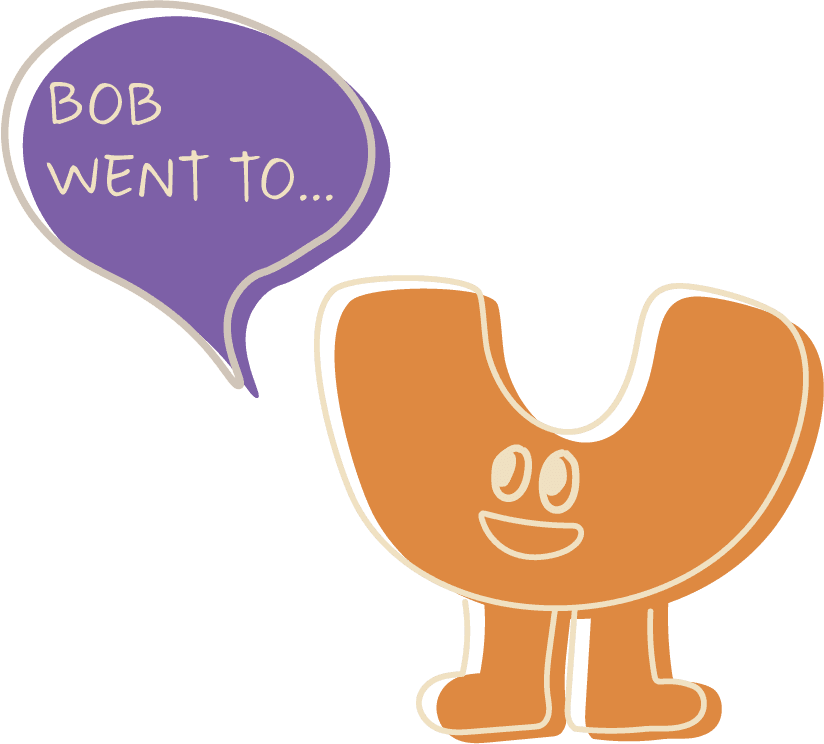
To avoid a penalty token, try not to say things like 'This made Bob feel...' when telling the story.
To avoid a penalty token, try not to say things like 'This made Bob feel...' when telling the story.

I got fired and felt sad.

Bob got fired.
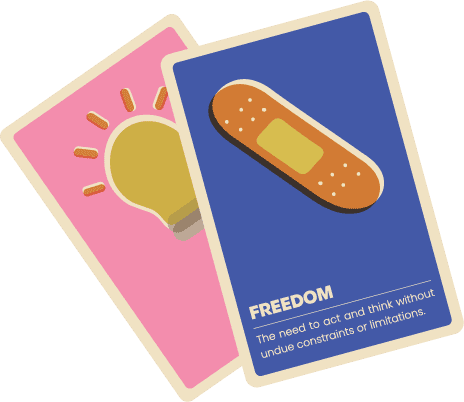
Feelings Cards
Needs Cards
Challenges Cards